Perhaps Tan Tock Seng Might Have Met Stamford Raffles?
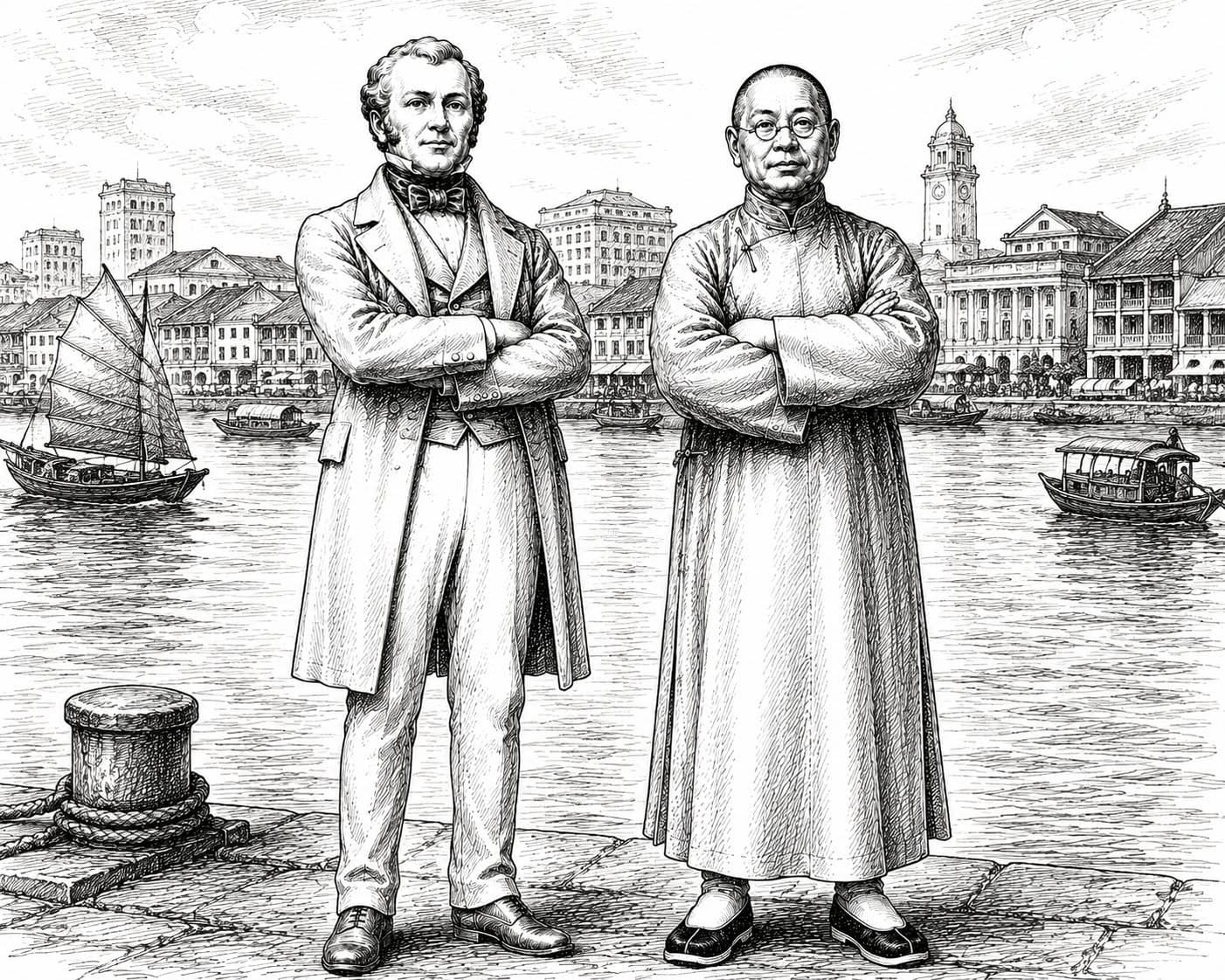
It is entirely plausible that the two have crossed paths.
When Raffles arrived in Singapore in 1819 (and later again in 1822), the island had a small population. Influential individuals within each ethnic and commercial community quickly became known to the colonial administration.
Tan Tock Seng is believed to have arrived in Singapore sometime between 1819 and 1821, during precisely this formative period.
As an ambitious young Hokkien trader involved in commerce around the Singapore River, he would likely have operated within the same commercial environment that Raffles himself actively monitored and developed.
Raffles was deeply interested in cultivating relationships with local Asian merchants. Unlike many colonial administrators of his time, he understood that Singapore’s success depended not merely on British governance, but on attracting Chinese, Malay, Arab, Indian and Bugis traders to settle and invest in the new port. He frequently engaged community leaders and merchant figures in matters involving trade, taxation, settlement organisation and social order.
As Tan Tock Seng’s business reputation grew, he could very well have emerged as one of the promising younger Chinese merchants within the settlement.
In a town where major commercial activity centred around a relatively compact riverfront district, 𝐢𝐭 𝐰𝐨𝐮𝐥𝐝 𝐡𝐚𝐯𝐞 𝐛𝐞𝐞𝐧 𝐝𝐢𝐟𝐟𝐢𝐜𝐮𝐥𝐭 𝐟𝐨𝐫 𝐫𝐢𝐬𝐢𝐧𝐠 𝐜𝐨𝐦𝐦𝐮𝐧𝐢𝐭𝐲 𝐟𝐢𝐠𝐮𝐫𝐞𝐬 𝐭𝐨 𝐫𝐞𝐦𝐚𝐢𝐧 𝐞𝐧𝐭𝐢𝐫𝐞𝐥𝐲 𝐮𝐧𝐤𝐧𝐨𝐰𝐧 𝐭𝐨 𝐜𝐨𝐥𝐨𝐧𝐢𝐚𝐥 𝐨𝐟𝐟𝐢𝐜𝐢𝐚𝐥𝐬.
One possible scenario is that Tan Tock Seng encountered Raffles during gatherings involving Chinese merchants and clan leaders, where issues concerning trade regulations, labour migration or urban organisation were discussed.
But beyond commerce, 𝐦𝐞𝐧 𝐥𝐢𝐤𝐞 𝐓𝐚𝐧 𝐓𝐨𝐜𝐤 𝐒𝐞𝐧𝐠 𝐬𝐞𝐫𝐯𝐞𝐝 𝐚𝐧𝐨𝐭𝐡𝐞𝐫 𝐜𝐫𝐢𝐭𝐢𝐜𝐚𝐥 𝐟𝐮𝐧𝐜𝐭𝐢𝐨𝐧 𝐢𝐧 𝐞𝐚𝐫𝐥𝐲 𝐜𝐨𝐥𝐨𝐧𝐢𝐚𝐥 𝐒𝐢𝐧𝐠𝐚𝐩𝐨𝐫𝐞: 𝐭𝐡𝐞𝐲 𝐡𝐞𝐥𝐩𝐞𝐝 𝐬𝐨𝐜𝐢𝐞𝐭𝐲 𝐡𝐨𝐥𝐝 𝐭𝐨𝐠𝐞𝐭𝐡𝐞𝐫.
In the early 19th century, the colonial government had limited manpower, limited institutions and limited capacity to manage the rapidly expanding migrant population. There was no modern welfare state. No Ministry of Social and Family Development. No public healthcare system as we understand it today.
Instead, much of society depended on wealthy merchants, clan leaders and philanthropists who effectively performed proto-government functions.
These elites funded:
hospitals,
burial grounds,
temples,
schools,
poor relief,
and community organisations.
Tan Tock Seng himself would later become most famous for donating substantial funds towards what became Tan Tock Seng Hospital, which served poor and sick migrants who otherwise had little access to healthcare.
From the colonial government’s perspective, such philanthropy was stabalising, helps the administrators and thus necessary. 𝐓𝐡𝐞 𝐠𝐨𝐯𝐞𝐫𝐧𝐦𝐞𝐧𝐭 𝐨𝐟 𝐭𝐨𝐝𝐚𝐲 𝐟𝐨𝐥𝐥𝐨𝐰𝐞𝐝 𝐭𝐡𝐢𝐬 𝐛𝐥𝐮𝐞𝐩𝐫𝐢𝐧𝐭.
A healthier migrant population meant a more productive workforce. Community leaders who could mediate disputes reduced social unrest. Wealthy merchants who commanded trust among Chinese migrants helped bridge communication between colonial administrators and communities that might otherwise distrust British authority.
𝐓𝐡𝐞𝐬𝐞 𝐰𝐞𝐫𝐞 𝐭𝐡𝐞 𝐎𝐆 𝐥𝐚𝐛𝐨𝐮𝐫, 𝐠𝐫𝐚𝐬𝐬𝐫𝐨𝐨𝐭𝐬 𝐚𝐧𝐝 𝐭𝐫𝐢𝐩𝐚𝐫𝐭𝐢𝐭𝐞 𝐧𝐞𝐭𝐰𝐨𝐫𝐤𝐬.
In many ways, Singapore’s early merchant-philanthropists formed an informal layer of governance beneath the colonial state itself.
Although no surviving historical record explicitly confirms a meeting between Tan Tock Seng and Stamford Raffles, the overlap in their timelines and roles makes such an encounter historically credible.
If it occurred, it would symbolise a remarkable moment: two individuals from vastly different worlds — one a British colonial founder, the other a migrant Chinese trader — standing at the very beginning of what would later become modern Singapore.