About Singapore’s Public Housing
(This article was first published 9th May 2012 by Benjamin Chiang)
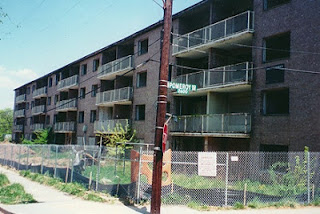
Mention “public housing” anywhere in the world, and chances are they’re talking about some poorly maintained building, with failing lifts and a place that is home to junkies.
A bit like this:
Singapore's public housing is something altogether different.
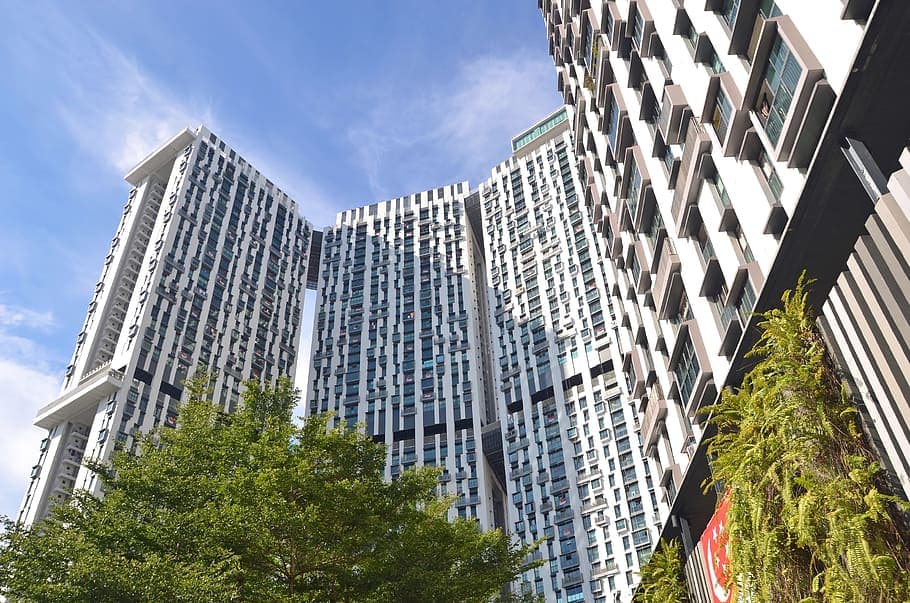
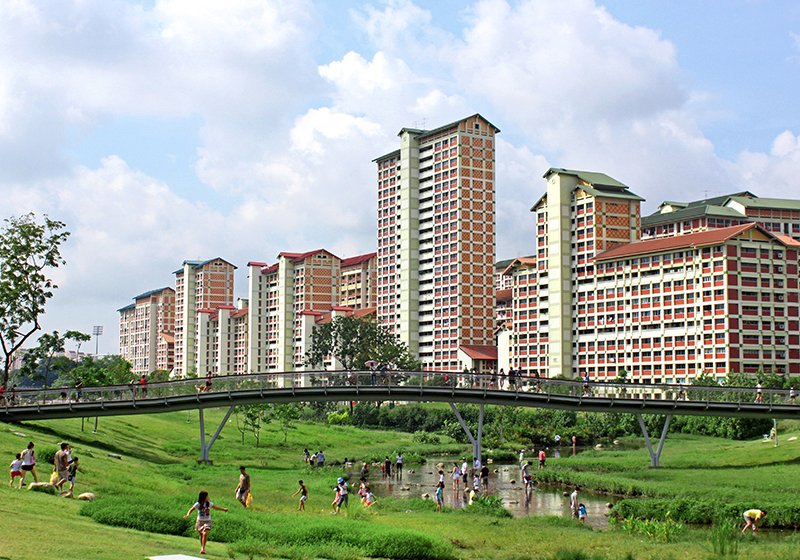
The Housing & Development Board (HDB) was established to provide affordable, subsidised homes for Singaporeans. Today, more than three-quarters of the population live in HDB flats, many of which are well-built, well-maintained, and integrated into thoughtfully planned towns.
Although locals sometimes joke that newer flats are "pigeon holes", they compare favourably with homes in other high-density cities such as Hong Kong and London. Most HDB estates are built around modern amenities, including schools, supermarkets, hawker centres, parks, playgrounds, sports facilities, public transport, and healthcare services—all within walking distance.
Owning an HDB flat provides more than just a roof over one's head. For many Singaporeans, it is their largest financial asset and an important source of social security. Buyers enjoy subsidised prices, access to government housing grants, and concessionary loans for eligible purchasers.
As long as lease and mortgage obligations are met, homeowners have security of tenure and can build equity over time.
An HDB flat also serves as a store of wealth. While housing prices can fluctuate, HDB flats have historically appreciated over the long term alongside Singapore's economic development. For many retirees, their homes become a valuable financial resource through “right sizing”, or schemes such as the Lease Buyback Scheme, although finding alternative accommodation after selling remains an important consideration.
The towns themselves are maintained by elected Town Councils, funded partly through monthly Service and Conservancy Charges paid by residents. Beyond maintaining common areas, estates are continually upgraded with new lifts, sheltered walkways, playgrounds, fitness corners, landscaping, and accessibility improvements.
Community life is supported by Residents' Committees and Residents' Networks, where volunteers organise neighbourhood activities, welcome new residents, and foster social cohesion. Public safety is reinforced through Neighbourhood Police Centres and Posts, supported by larger police divisions that serve each region.
Singapore's housing story is also one of continual renewal. Through programmes such as the Selective En bloc Redevelopment Scheme (SERS), the Voluntary Early Redevelopment Scheme (VERS, when implemented), and the steady construction of new Build-To-Order (BTO) flats, older estates can be rejuvenated while new housing continues to be supplied for younger generations.
Perhaps the greatest challenge has always been balancing two competing goals: keeping housing affordable for first-time buyers while preserving the value of what is, for many families, their single largest asset.
That balancing act has been central to Singapore's housing policy since independence.
As land becomes scarcer, incomes rise, construction costs increase, and expectations evolve, maintaining both affordability and asset values becomes increasingly complex. How Singapore continues to navigate this delicate balance will remain one of the country's most closely watched public policy challenges.