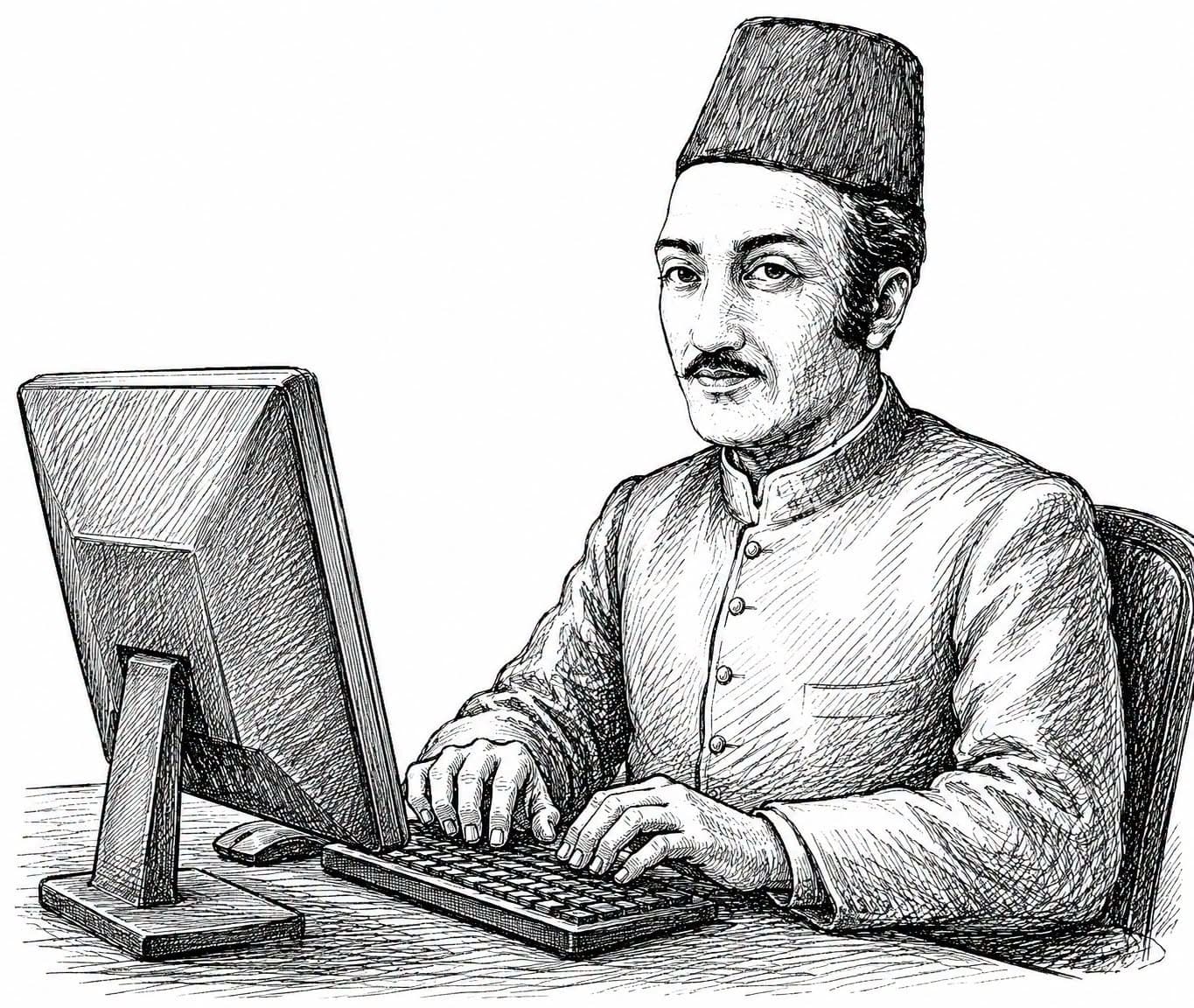
𝐌𝐮𝐧𝐬𝐡𝐢 𝐀𝐛𝐝𝐮𝐥𝐥𝐚𝐡: 𝐒𝐢𝐧𝐠𝐚𝐩𝐨𝐫𝐞'𝐬 𝐅𝐢𝐫𝐬𝐭 𝐁𝐥𝐨𝐠𝐠𝐞𝐫
When asked about the distant past of Singapore, everyone has heard of Stamford Raffles.
Many know Tan Tock Seng. And if you’ve paid attention to your social studies, you probably know Whampoa.
But far fewer Singaporeans have heard of Munshi Abdullah - one of the most important chroniclers of Singapore's earliest years.
Abdullah bin Abdul Kadir was born in 1797. He was a teacher, translator, scholar and writer who moved comfortably between different worlds. He taught Malay to British officials, interacted with local rulers, merchants and common folk, and spent much of his life observing the remarkable changes taking place around him.
What makes Abdullah interesting is not that he governed anyone, built anything, or became fabulously wealthy. His central role, was that he wrote things down.
By today’s standards, that sounds bland right? Every minute, someone is posting on Facebook, publishing on Substack, or recording a podcast.
But this was the early 1800s, documenting things was rare. And even rare, was what he wrote about.
Much of traditional Malay literature focused on kings, courts, legends and heroic figures. Stories were often written to preserve traditions, celebrate rulers or teach moral lessons.
Abdullah wrote about real life.
He wrote about the people he met, the conversations he heard, the events he witnessed and the society around him. He commented on governance, education, culture and human behaviour. He praised people he admired and criticised people he felt deserved criticism.
In many ways, Hikayat Abdullah reads less like an ancient manuscript and more like a nineteenth-century blog.
He did not write history from the perspective of a king. He wrote history from the perspective of an observer.
Abdullah lived close enough to power to see how decisions were made, but far enough away to comment on them honestly. He met British administrators, local rulers and community leaders. He wrote about Stamford Raffles not as a marble statue from a textbook, but as a real person with strengths and weaknesses.
He was willing to point out inefficiency. He questioned practices he thought were backward. He praised competence when he saw it. He was not particularly interested in protecting reputations.
Doesn’t that sound like a blog post?
If Abdullah were alive today, he would 100% have a Substack account.
He would write long essays about public policy. He would review politicians. He would complain about inefficiency. He would attract devoted followers and equally devoted critics. Half the internet would share his articles. The other half would accuse him of being biased.
So why don’t you start documenting too?
Write a journal. Keep a blog. Publish on Facebook. Record family stories before they disappear. Take notes about the strange, funny and frustrating things you see around you.
You never know which observation might become valuable one day.