Whampoa Hoo Ah Kay Was Probably Richer Than Colonial Administrators
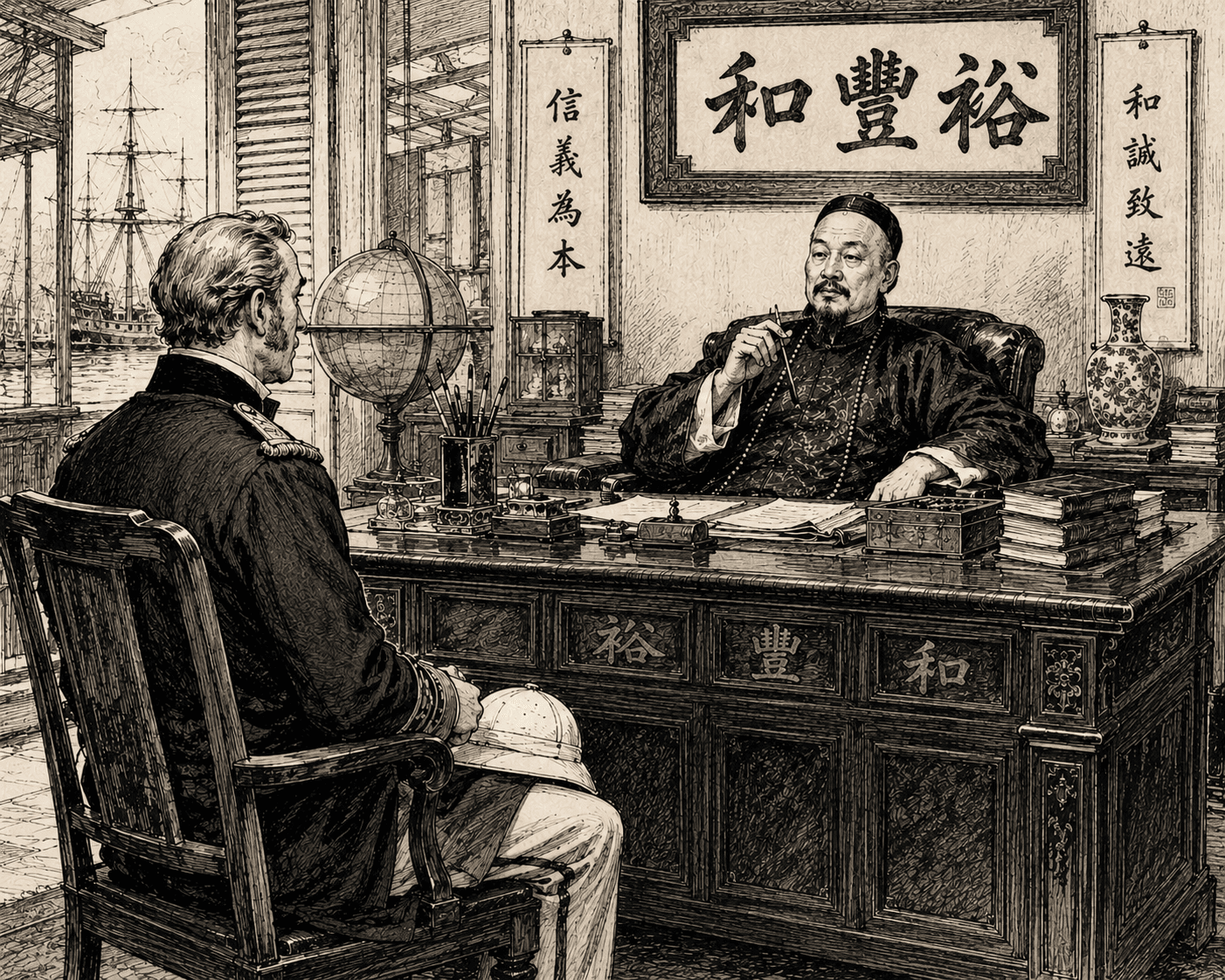
In colonial Singapore, who do you imagine was wealthier?
The Governor of Singapore? Or a Chinese immigrant merchant?
Most people instinctively choose the Governor.
But colonial administrators were career civil servants. They are paid a lot, much more compared to the local population. But this still pales in comparison to wealth in the business community.
There is a good chance that by the 1870s, Singapore merchant Hoo Ah Kay—better known as Whampoa—was richer than many British officials stationed here.
𝐒𝐚𝐥𝐚𝐫𝐲 𝐈𝐬 𝐍𝐨𝐭 𝐖𝐞𝐚𝐥𝐭𝐡
A colonial governor held enormous authority. He could influence laws, administration, taxation and public policy.
But governors were still salaried employees. Even highly placed colonial officials earned fixed incomes. Comfortable incomes, certainly. Prestigious incomes. But still salaries.
Whampoa operated under a different model entirely: He owned businesses, property, warehouses. He participated in regional trade networks stretching across Southeast Asia.
While a British official's wealth was largely limited by his salary, a merchant's wealth could compound through successful trade.
This is not very different from today.
A cabinet minister may earn a substantial salary. But the founder of a successful technology company may become vastly wealthier.
Authority and wealth are not always the same thing.
𝐒𝐢𝐧𝐠𝐚𝐩𝐨𝐫𝐞 𝐖𝐚𝐬 𝐀 𝐒𝐭𝐚𝐫𝐭𝐮𝐩 𝐂𝐨𝐥𝐨𝐧𝐲
Modern governments are large institutions. Singapore today employs tens of thousands of civil servants and manages hundreds of billions of dollars in public assets.
Colonial Singapore was very different.
The government was surprisingly small. It had limited manpower, limited resources and limited reach. Its role was primarily to maintain order, enforce laws and keep trade flowing.
Much of the actual economic activity was carried out by merchants.
This meant that individuals like Whampoa occupied an unusually important position.
The government could regulate trade. But merchants generated it.
The government could build a port. But merchants filled it with ships.
The government could create stability. But merchants created prosperity.
𝐓𝐡𝐞 𝐑𝐞𝐚𝐥 𝐄𝐜𝐨𝐧𝐨𝐦𝐢𝐜 𝐄𝐧𝐠𝐢𝐧𝐞
By the nineteenth century, Singapore had become one of Asia's busiest ports.
Thousands of ships passed through annually and connected Singapore with China, India, the rest of South East Asia and Europe
This was tremendous opportunity and successful traders could scale their businesses far beyond anything available to a salaried administrator.
This is why many of Singapore's most influential figures were not government officials but merchants.
People such as Tan Tock Seng, Tan Kim Seng and Whampoa accumulated fortunes through commerce rather than political office.
Their wealth often funded schools, hospitals, clan associations and public infrastructure.
In some cases, they were performing functions that today would be handled by government agencies.
𝐓𝐡𝐞 𝐁𝐫𝐢𝐭𝐢𝐬𝐡 𝐍𝐞𝐞𝐝𝐞𝐝 𝐌𝐞𝐧 𝐋𝐢𝐤𝐞 𝐖𝐡𝐚𝐦𝐩𝐨𝐚
The British recognised this reality.
Whampoa was appointed to important public positions including Justice of the Peace, Municipal Commissioner and member of the Legislative Council.
These appointments were not simply honorary. Colonial administrators understood that governing Singapore required cooperation with influential local leaders.
Whampoa brought something many officials lacked: Deep commercial networks, knowledge of local communities and economic influence.
Commercial power, is a different kind of power.
𝐓𝐡𝐞 𝐒𝐮𝐫𝐩𝐫𝐢𝐬𝐢𝐧𝐠 𝐋𝐞𝐬𝐬𝐨𝐧
The story of Whampoa challenges the way we imagine colonial history.
We often picture a simple hierarchy: British rulers at the top. Everyone else beneath them.
The reality is not like this. Political authority and economic power were often held by different people.
It is a good lesson for us to take away today - why would you want to join political office, if your goal is merely wealth, why not do it through commerce? After all, the talent required to run both is not very much different. You firstly need skills in rally up large communities.
The wealth provided by business is expandable wealth. It continues to grow and it grows free of ethical encumbrances.
The salary provided by the State is not wealth at all. The minute you’re out of employment, your cash flow stops.
𝐒𝐨 𝐰𝐡𝐨 𝐰𝐚𝐬 𝐦𝐨𝐫𝐞 𝐩𝐨𝐰𝐞𝐫𝐟𝐮𝐥?
𝐓𝐡𝐞 𝐆𝐨𝐯𝐞𝐫𝐧𝐨𝐫 𝐰𝐡𝐨 𝐦𝐚𝐝𝐞 𝐭𝐡𝐞 𝐥𝐚𝐰𝐬?
𝐎𝐫 𝐭𝐡𝐞 𝐦𝐞𝐫𝐜𝐡𝐚𝐧𝐭 𝐰𝐡𝐨 𝐜𝐨𝐧𝐭𝐫𝐨𝐥𝐥𝐞𝐝 𝐭𝐡𝐞 𝐬𝐡𝐢𝐩𝐬, 𝐰𝐚𝐫𝐞𝐡𝐨𝐮𝐬𝐞𝐬 𝐚𝐧𝐝 𝐭𝐫𝐚𝐝𝐞?
Perhaps this quote (often attributed to founder of Rothschild) might shed some light: "𝑷𝒆𝒓𝒎𝒊𝒕 𝒎𝒆 𝒕𝒐 𝒊𝒔𝒔𝒖𝒆 𝒂𝒏𝒅 𝒄𝒐𝒏𝒕𝒓𝒐𝒍 𝒕𝒉𝒆 𝒎𝒐𝒏𝒆𝒚 𝒐𝒇 𝒂 𝒏𝒂𝒕𝒊𝒐𝒏, 𝒂𝒏𝒅 𝑰 𝒄𝒂𝒓𝒆 𝒏𝒐𝒕 𝒘𝒉𝒐 𝒎𝒂𝒌𝒆𝒔 𝒊𝒕𝒔 𝒍𝒂𝒘𝒔.”