𝐖𝐡𝐲 𝐝𝐢𝐝 𝐞𝐥𝐞𝐜𝐭𝐫𝐢𝐜𝐢𝐭𝐲 𝐛𝐢𝐥𝐥𝐬 𝐢𝐧𝐜𝐫𝐞𝐚𝐬𝐞, 𝐛𝐮𝐭 𝐩𝐞𝐭𝐫𝐨𝐥 𝐩𝐫𝐢𝐜𝐞𝐬 𝐟𝐚𝐥𝐥?
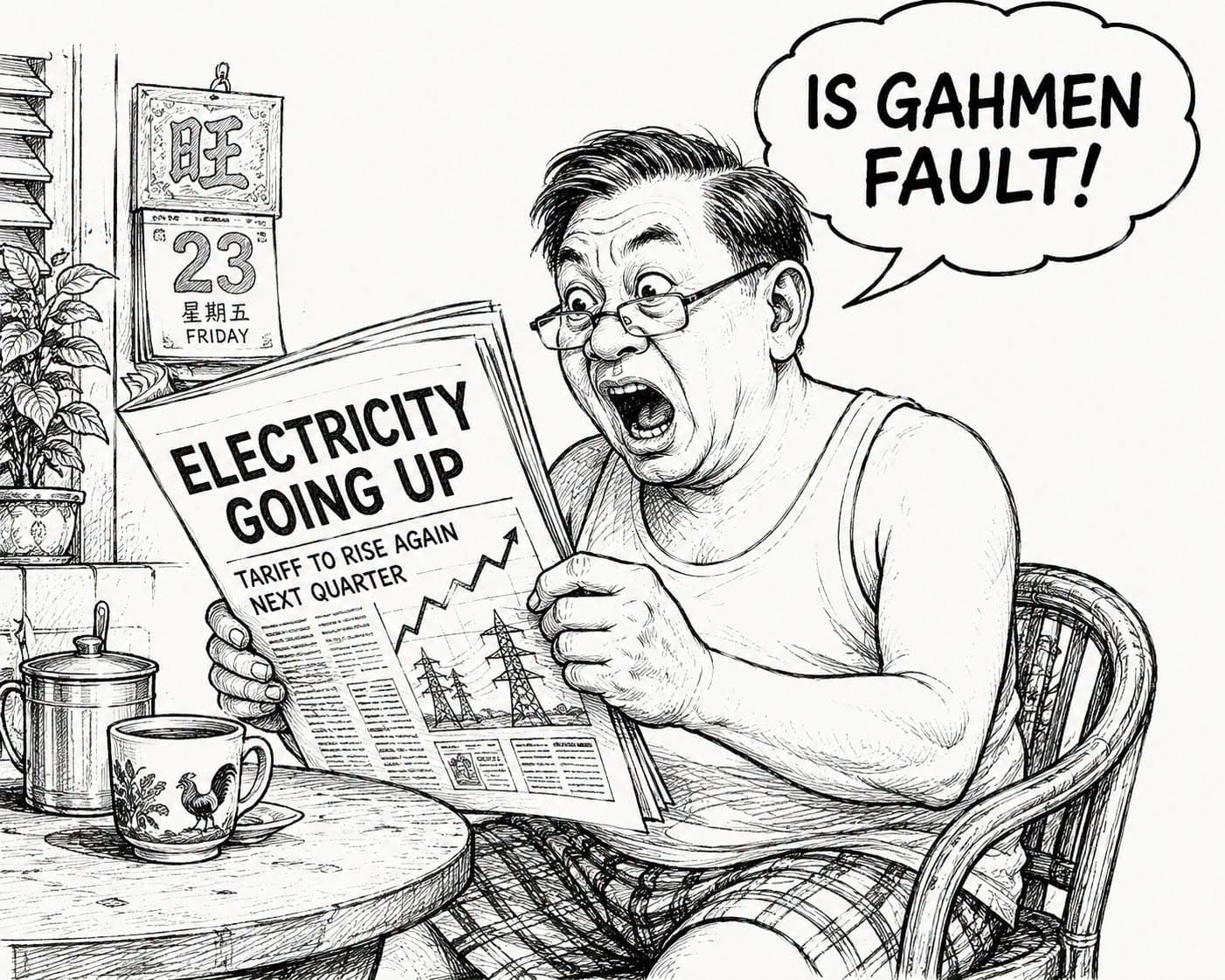
Oil prices fell. Yet SP Group announces that electricity prices are going up.
Meanwhile, petrol stations seem to change their prices the moment there's news of a conflict somewhere in the world.
The anti-establishment folks come out guns blazing: "Ministers need to be held to account! Why like dat?!"
The answer is actually quite simple: 𝐄𝐥𝐞𝐜𝐭𝐫𝐢𝐜𝐢𝐭𝐲 𝐩𝐫𝐢𝐜𝐞𝐬 𝐚𝐧𝐝 𝐩𝐞𝐭𝐫𝐨𝐥 𝐩𝐫𝐢𝐜𝐞𝐬 𝐚𝐫𝐞 𝐜𝐚𝐥𝐜𝐮𝐥𝐚𝐭𝐞𝐝 𝐜𝐨𝐦𝐩𝐥𝐞𝐭𝐞𝐥𝐲 𝐝𝐢𝐟𝐟𝐞𝐫𝐞𝐧𝐭𝐥𝐲.
Many people assume that because oil prices have fallen this week, electricity should immediately become cheaper.
But Singapore's electricity tariff isn't calculated that way. And it's not calculated that way, because fuel is not bought that way either.
The tariff you pay today is based on the 𝐚𝐯𝐞𝐫𝐚𝐠𝐞 𝐜𝐨𝐬𝐭 𝐨𝐟 𝐧𝐚𝐭𝐮𝐫𝐚𝐥 𝐠𝐚𝐬 𝐩𝐮𝐫𝐜𝐡𝐚𝐬𝐞𝐝 𝐨𝐯𝐞𝐫 𝐭𝐡𝐞 𝐩𝐫𝐞𝐯𝐢𝐨𝐮𝐬 𝐟𝐞𝐰 𝐦𝐨𝐧𝐭𝐡𝐬, not today's fuel price.
Think of it as looking at your rear-view mirror.
If natural gas was expensive in April, May and June, then electricity prices in July can still rise, even if prices have started falling today.
If fuel prices remain low, you'll likely see the benefit in the next quarterly revision instead.
In other words: 𝐓𝐨𝐝𝐚𝐲'𝐬 𝐞𝐥𝐞𝐜𝐭𝐫𝐢𝐜𝐢𝐭𝐲 𝐛𝐢𝐥𝐥 𝐫𝐞𝐟𝐥𝐞𝐜𝐭𝐬 𝐲𝐞𝐬𝐭𝐞𝐫𝐝𝐚𝐲'𝐬 𝐟𝐮𝐞𝐥 𝐦𝐚𝐫𝐤𝐞𝐭.
𝐖𝐡𝐚𝐭 𝐚𝐛𝐨𝐮𝐭 𝐩𝐞𝐭𝐫𝐨𝐥 𝐜𝐨𝐦𝐩𝐚𝐧𝐢𝐞𝐬?
Petrol companies are not regulated utilities. They're retailers competing with one another.
They can change prices almost whenever they want.
When wholesale petrol becomes more expensive, they don't have to wait for the next quarter.
They simply update the price board.
𝐀𝐧𝐝 𝐭𝐡𝐞𝐧 𝐰𝐡𝐲 𝐃𝐨𝐞𝐬 𝐏𝐞𝐭𝐫𝐨𝐥 𝐀𝐥𝐰𝐚𝐲𝐬 𝐅𝐞𝐞𝐥 𝐋𝐢𝐤𝐞 𝐈𝐭 𝐆𝐨𝐞𝐬 𝐔𝐩 𝐅𝐚𝐬𝐭𝐞𝐫 𝐓𝐡𝐚𝐧 𝐈𝐭 𝐂𝐨𝐦𝐞𝐬 𝐃𝐨𝐰𝐧?
You've probably heard this complaint before.
There's actually a name for this.
Economists call it the "𝐑𝐨𝐜𝐤𝐞𝐭𝐬 𝐚𝐧𝐝 𝐅𝐞𝐚𝐭𝐡𝐞𝐫𝐬" 𝐩𝐡𝐞𝐧𝐨𝐦𝐞𝐧𝐨𝐧.
Y'know...because prices shoot up like rockets and float down like feathers.
Why?
Partly because stations may have bought fuel at higher prices and need to sell that inventory first.
Partly because operating costs don't fall just because crude oil does.
And partly because retailers have little incentive to be the first to slash prices if everyone else is still charging more.
It's not just Singapore, the same pattern appears in many countries around the world.
𝐒𝐨 𝐰𝐡𝐲 𝐝𝐨𝐞𝐬𝐧'𝐭 𝐄𝐌𝐀 𝐩𝐫𝐢𝐜𝐞 𝐞𝐥𝐞𝐜𝐭𝐫𝐢𝐜𝐢𝐭𝐲 𝐥𝐢𝐤𝐞 𝐩𝐞𝐭𝐫𝐨𝐥?
If electricity worked like petrol, your electricity bill is going to change every week.
During events like the Ukraine war or recent Middle East tensions, households could have seen sharp jumps from one billing cycle to the next.
Instead, Singapore smooths the cost over an entire quarter.
So yeah, that's why you're paying more for electricity now even when oil prices have TEMPORARILY cooled.